
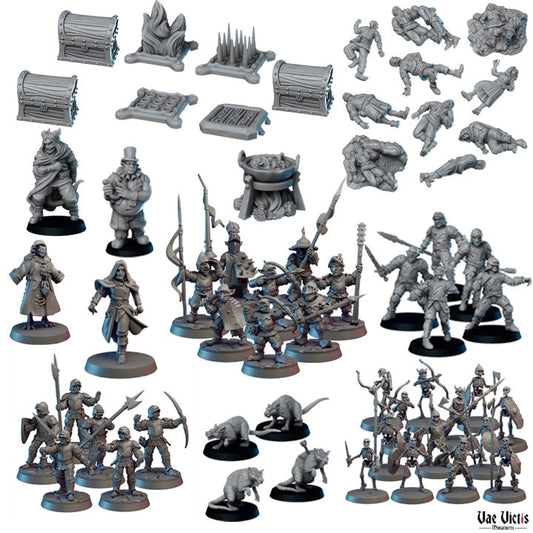
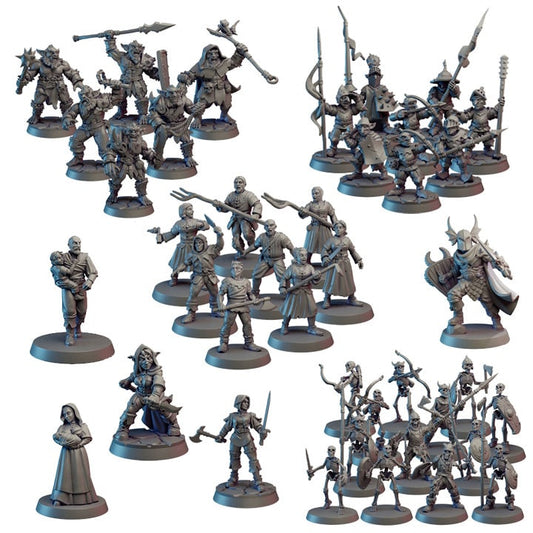
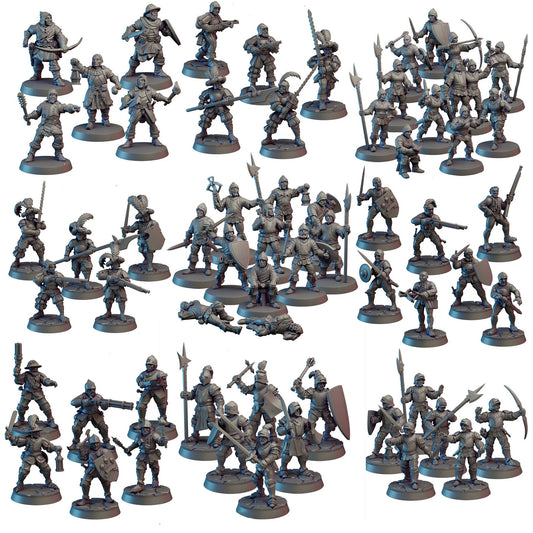
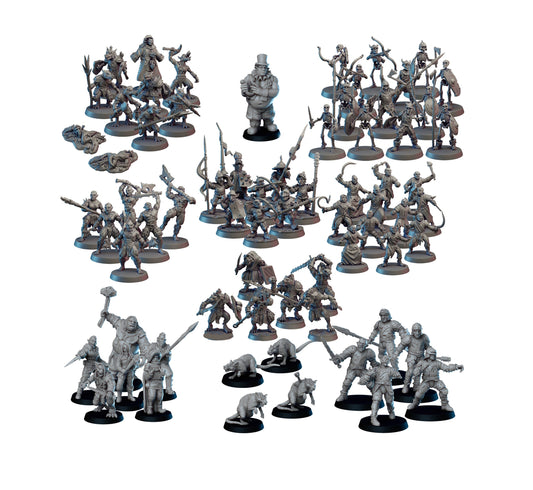




A deserted campsite. One bedroll still warm. Something moving just beyond the tents. You already have the beginning of an encounter, and you haven't put a single monster on the table.
Miniatures and scatter terrain can help tell that story before anyone rolls a die. For your next session, try building one small scene around a decision the players need to make. Here's a practical way to put it together.
Start with the problem the party must solve
Write one sentence that explains what makes this place worth stopping for. “The party finds a camp” gives you a location. “The party finds an abandoned camp just as someone starts stealing the supplies” gives you something to play.
Choose an objective beyond defeating every enemy: recover a missing map, protect a traveler, follow a trail, or get everyone out before the danger arrives. Then pick figures that help communicate those roles.
Give each terrain piece a job
Scatter terrain is the small scenery you can move around a larger play area. Instead of filling every empty space, choose a few pieces with a clear purpose:
- A focal point: a tent, shrine, or doorway that draws attention to the scene.
- A choice of routes: scenery that makes players decide whether to move around, through, or behind something.
- A clue: an abandoned bedroll or scattered supplies that suggest what happened.
Agree on what the scenery means in your game before it matters. A decorative tent doesn't automatically provide cover; that depends on your rules and the game master's ruling. Leave room for miniature bases, hands, and dice, too.
Try this scene: the camp that isn't empty
The hook: the party discovers a roadside camp with nobody in sight. A pack near one of the tents begins to move.
The setup: arrange two tents at an angle, place bedrolls nearby, and leave an open approach. Use a spare marker for the pack. Keep the creature or NPC miniature off the table until the players investigate.
The twist: a frightened traveler is hiding from a creature attracted by the food. The traveler wants help, the creature wants dinner, and the party needs to decide what to do with both.
This is a scene prompt, so choose creatures, statistics, and difficulty for your group's game and level. It can become a negotiation, a rescue, a chase, or a fight. The same little camp supports all four.
Check scale and set options before ordering
Choose pieces that sit comfortably beside the miniatures you already use. A scale label describes proportions; it doesn't guarantee the exact height or footprint of every sculpt. If a tent must fit a particular grid space, ask for measurements first.
Our Adventurer Camp Set, sculpted by Tiny Furniture, offers 28mm and 32mm scale options, with choices for four bedrolls, four tents, or both. Check the selected option for what is included. The listing images are digital representations, and the physical pieces arrive unpainted.
Build a small kit you can reuse
After the session, keep a short note with the pieces: what each represents, how much space the layout needs, and one alternative story. Next time, the campsite could belong to missing pilgrims, suspicious merchants, or friendly scouts.
Before game night, check that you have an objective, the figures you need, a few useful scenery pieces, and enough open space to play. Browse our terrain and scenery for your next setting, or ask us about dimensions if fit matters. Small scene. Plenty of room for adventure.