




Your first box of miniatures should give you pieces you're excited to put on the table. A large model count can look tempting, but the useful question is simpler: which of these figures will appear in your next few sessions?
Start with the campaign you actually plan to run, then compare sets against that plan. Here's how to make a shortlist that works for your game and your hobby time.
Make a list for the next three sessions
Write down the people, creatures, and objects you expect the party to meet. Keep it broad: travelers, guards, a group of small enemies, something unsettling in a tomb. You don't need the whole campaign mapped out.
Next, mark which roles need several figures at once. One impressive villain won't stand in for six opponents spread across a room. Equally, a box full of identical enemies may leave you searching for a merchant or guide.
Compare variety and repetition
Look for a balance that suits your adventure. Repeated creature types help represent groups, while distinct characters make important NPCs easy to recognize. Props such as chests or traps add useful markers without needing a whole terrain collection.
Give each set three quick scores: how many upcoming scenes it helps with, how many figures you want to paint, and how much overlaps with pieces you already own. A smaller set that answers all three can be a better starting point than a larger box you won't open for months.
Read the contents before counting the pieces
A set can combine characters, monsters, scenery, and markers. All may be useful, but they serve different jobs. Read the contents list to see what the advertised total includes, then check the selected scale and base option.
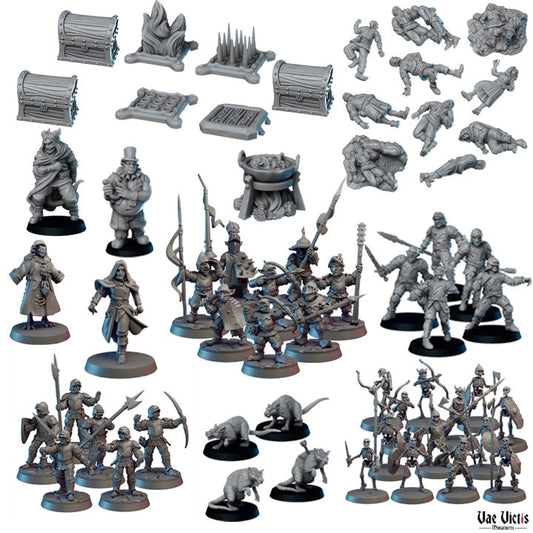
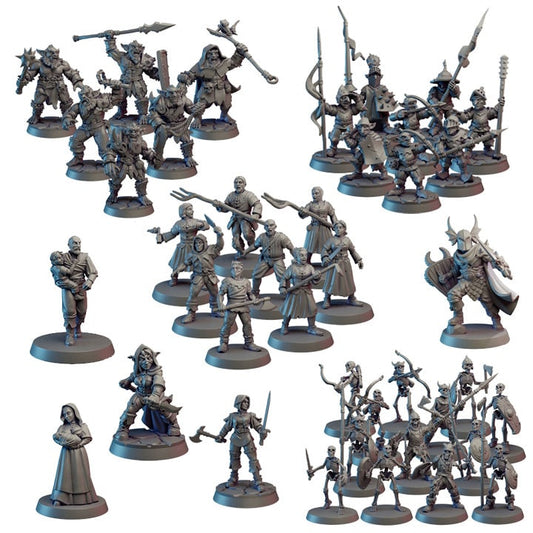
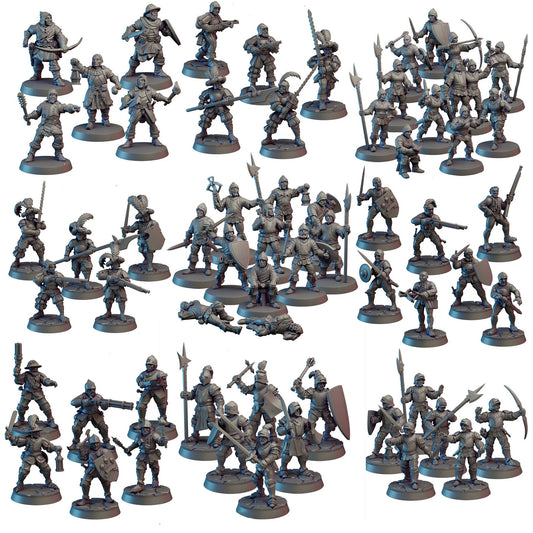
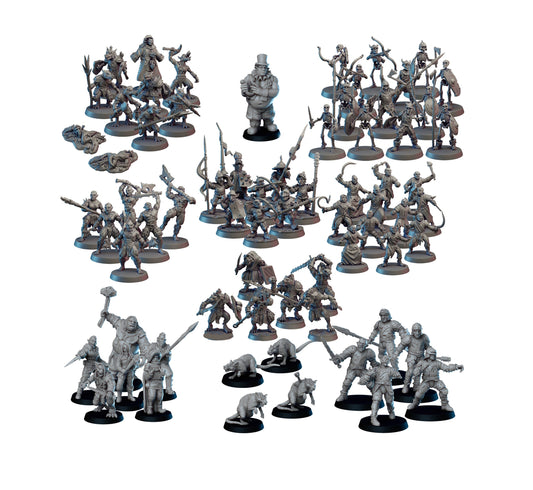
For example, our 60-piece Dungeon Master Starter Pack combines figures such as guards, goblins, and undead with pieces including traps and chests. The Vae Victis Miniatures sculpts are offered in 28mm or 32mm heroic scale, with different base selections. The listing also identifies assembly requirements. Use those details to decide whether the mix fits your plans.
Leave room for the hobby work
Our miniatures arrive unpainted. Plan your first painting batch around the next session: a few enemies and one memorable character is a manageable place to start. The rest can wait until they're needed.
Allow time for any assembly described in the listing, as well as painting and transport preparation. If you're ordering for a particular game night, check the shop's current production information and allow for shipping time too.
Expand after a few games
After each session, note the model you wished you had. Repeated gaps tell you what to buy next: perhaps civilians for a town campaign, another enemy group, or one large creature for a special encounter.
Browse our starter sets with your session list beside you. Once you've chosen the cast, our encounter-building guide can help turn those pieces into a scene.
Featured image: digital product render from the 60-piece Dungeon Master Starter Pack listing; sculpts by Vae Victis Miniatures. Check the selected options for included bases and contents.