
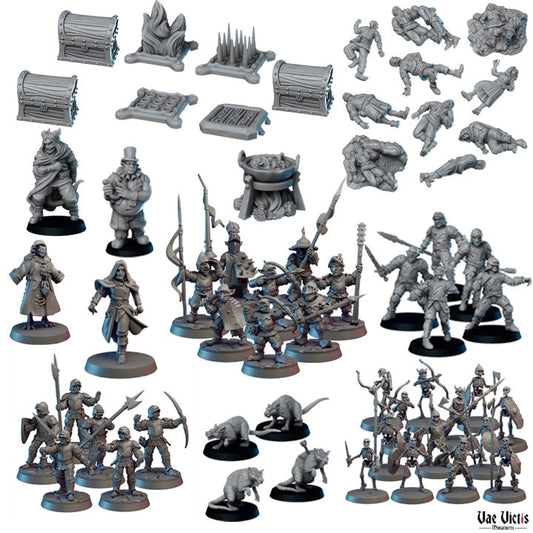
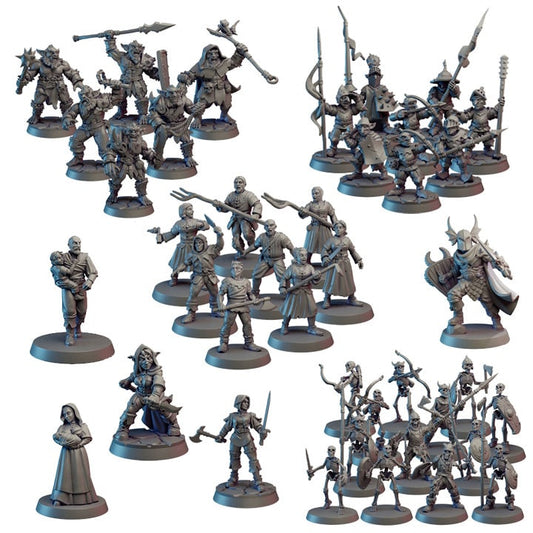
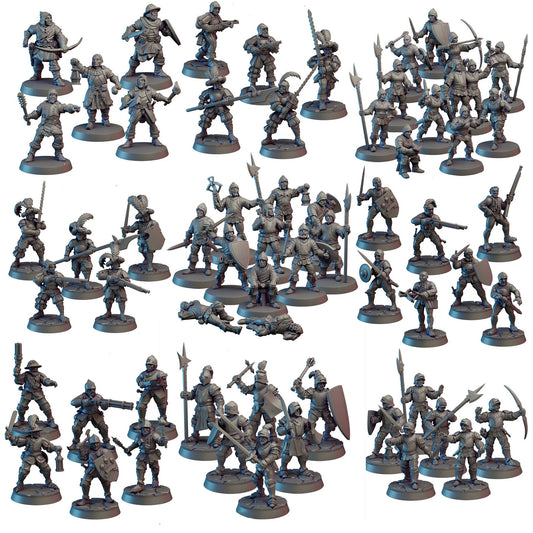
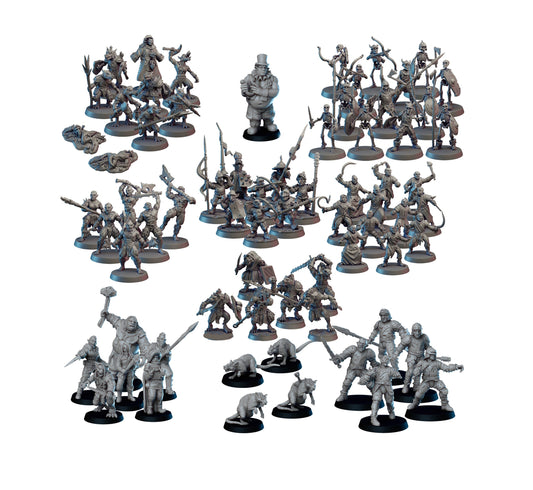




Featured image: the Vae Victis skeleton army set from our catalog. Supplied models are unpainted resin; this guide describes a painting plan you can adapt.
A row of unpainted miniatures can feel like one enormous project. Batch painting breaks that project into repeatable steps: paint a shared material across a small group, then move to the next. The trick is choosing a batch you can finish without turning the hobby into a production line.
Start with three to five models
Pick a small group with something in common, such as skeletons, armored guards or townsfolk wearing similar clothes. Put the remaining models away for now. A complete set does not have to become a single painting session.
Our 13-piece skeleton army, for example, can become several small painting groups. Its 28mm and 32mm options also include different base choices, so confirm the selection before ordering. Use your first group to establish the look for the rest.
Finish one test miniature first
Take one model through your intended finish before repeating the process. Decide which materials deserve attention and which can remain simple. On a skeleton, that might mean bone, a weapon, cloth and a base, with one small accent color.
Write down the paint names and the order you used them. If a highlight needs three attempts to get right, finding that out on one model is much easier than correcting five. Our color scheme planning guide can help you limit the palette.
Work by material, then by detail
- Prepare the group. Check parts and complete the preparation appropriate to the supplied models and your chosen primer. Follow the products' application and drying instructions.
- Paint the largest shared areas. Apply the same bone, cloth or armor color across the group. Let each layer dry before painting over it.
- Add the common shading and highlights. Refer to the test model, keeping the most visible features consistent.
- Give each figure a small distinction. Change a scarf, shield marking or accent. This helps similar models feel individual without requiring a different palette for every figure.
- Finish the bases together. Repeating a ground color or base-rim color gives the group a shared setting.
Keep the test miniature nearby as a reference. When you return on another day, it shows the intended result more clearly than memory alone. A note such as “cloth finished; leather next” also makes a short session easier to begin.
Set a finish line you can recognize
Choose a modest standard for this batch: the main materials are distinct, focal details are readable, and the bases are complete. Optional weathering or elaborate freehand work can wait for a later project. Finishing a usable group is a worthwhile result.
If repeating a color starts to feel tedious, reduce the next batch. If one model demands extra attention, set it aside as a separate character project. The workflow should support your enjoyment, not dictate it.
Choose your next group from our fantasy miniatures, and use the delivery-to-paint-desk guide to plan the steps before painting begins.